Real Animal Cruelty

The world is FULL of what I term as “Those kinds of people.”

You know the sort. The kind that make you think… Ye gods… and these people actually reproduce?

So there I was sitting at the stop light in town waiting for it to turn green, and in front of me is this big honkin gas guzzlin’ SUV with stickers all over the back. Not just on the bumper, oh no. All over the entire rear of the vehicle. I’ve never quite understood why some people pay more for a vehicle that cost more than some people’s houses, and then ghetto it up with $2 stickers. Anyway…

The center sticker said ‘Animal Cruelty is a Crime!’ Flanked by several classy wingmen, including ‘Ignorance Breeds Ignorance’ and ‘End Pit Bull Fighting NOW!’

By these, and about dozen other stickers, I quickly deduced that they were an animal rights Nazi, err, I mean ‘activist’. Probably the type that gets email newsletters from PETA.

Now, as many of ye can attest to, I don’t have a problem with what anyone’s beliefs are, one way or another. I’ll agree to disagree on just about anything.

It’s when people feel the need to glaringly shove their views in your field of vision and assault you with them, that it kind of irks me. These stickers were not tastefully placed. It wasn’t one or two. It was over a dozen. They weren’t on the front of the vehicle, nor on the sides. They were on the rear so you HAD no choice but to see them if you were behind them.

Sure, it’s ‘freedom of speech’, and thus, protected. But people want all of their favorite rights, but none of the responsibility that goes with it.

What ever happened to doing something tastefully? Back in 2008 I had a Ron Paul sticker on my car. It was one sticker, on each bumper. That was it. I also had a sign for my house. But I didn’t force it down anyone’s throat. And I really believed in that fellow.

You want to know what ‘animal cruelty’ is? It’s when my friggin cat wakes me up at 4 AM by mrowring in my face or stepping on my head, and has done so every hour, on the hour, for the past five hours. That’s animal cruelty. As in cruelty, by the animal.

And the fact that I DON’T gut and then summarily stir fry his fuzzy arse after such behavior, makes me a saint, in my opinon.

Now, animal cruelty, as most people think of it, does exist. But it certainly isn’t rampant behavior. Yea, dogs are pitted against dogs in some underground circuits, as well as cockfighting and the like, but it’s not like it goes on at every street corner. As long as there is money to be made on such things, they’ll exist. They’ve always existed, and they always WILL exist’. And no amount of awareness or ‘Stop XYZ now’ stickers are going to change that. They’ll just go MORE underground and thus become MORE profitable for the people who do it. Animals, on a whole, and especially pets, are treated better today, than at ANY time in the past. (Commercial meat farming operations not included.)

So believe in what ye believe in. Slap a bumper sticker or three on your vehicle if you feel the need, but please. Cut it out with the billboard on wheels thing already on your favorite cause. It’s so Passe.

Categories: Animals, Nature, US News | Tags: , , , , , | 1 Comment

Spring Greens Medley!

Springtime means fresh Spring greens. And fresh Spring greens means FOOD!

I did make a smaller dish a few days earlier, but this is the first real, substantial, spring greens dish of the year, so I went all out and gathered a nice medley to mix and prepare for the family, and to share with you.

The following went into my Spring Greens medley.

(Click pictures to enlarge.)

Wintercress – Barbarea vulgaris, is a member of the Brassicaceae family.

Wintercress

Raw, they are a bit bitter and so-so. Cooked, they become absolutely mouthwatering. This was definitely the champion green of the dish. Everyone raved about it. It really does become a foundational green when boiled, but with a very delicate and delicious flavor.

Garlic Mustard – Alliaria petiolata, is also a member of the Brassicaceae family.

Garlic Mustard 2

Raw, they are a bit meh, in my opinion. Cooked they become less meh. Good, but not as good as Wintercress. ;) The stems can be stout and a bit stringy as they grow, so take only the first few top inches of the stem. Unless of course you don’t mind the stringy aspect. It all cooks down fairly well when boiled for a few minutes.

This is the amount of Wintercress and Garlic Mustard I collected to use for the meal I made. A lovely mess of greens, isn’t it?

Mess of Greens

Wild Garlic – Allium Canadense.

Wild Garlic

I like to use the greens from these more than the bulbs. The bulbs will grow new greens, and I rotate the area I collect from so as to be sure to never over-harvest. As such I’ve maintained (and expanded) my patch of wild garlic exponentially over the past few years. All the garlic taste you love, with none of the commercial product’s signature ‘garlic breath’.

Dandelion – Taraxacum Officinale

Dandelion

What wild spring greens dinner would be perfect without a little bit of dandelion? I gathered a whole decent sized plant from the tip of the root up, and it was enough to impart it’s goodness to the whole dish. Every part of the plant was used and later chopped up. Leaves, buds, crown, and a tiny bit of the root. Delicious!

Thistle – Cirsium spp.

Thistle

An ‘unknown’ but delicious thistle made it into my Spring Medley. I say unknown, although that’s really not the case. I’ve been eating it for over 30 years, and my father ate it for 50 years before that. I just don’t have the stupid Latin name for it pegged as of yet. More on that later.

So, the wifey and I took a nice little walk and collected these greens as we went. It’s mighty handy to carry a plastic grocery bag in your pocket, and a folding pocket knife. You never know when you are going to run into wild food that you want to bring home with you!

This is a picture of all the greens that went into the dish:

Greens Board 2

The greens (sans wild garlic) were boiled for a few minutes. I boiled them longer than I would have since they were a ‘mixed’ greens, and some were more bitter than others. Probably about 10 minutes, tops.

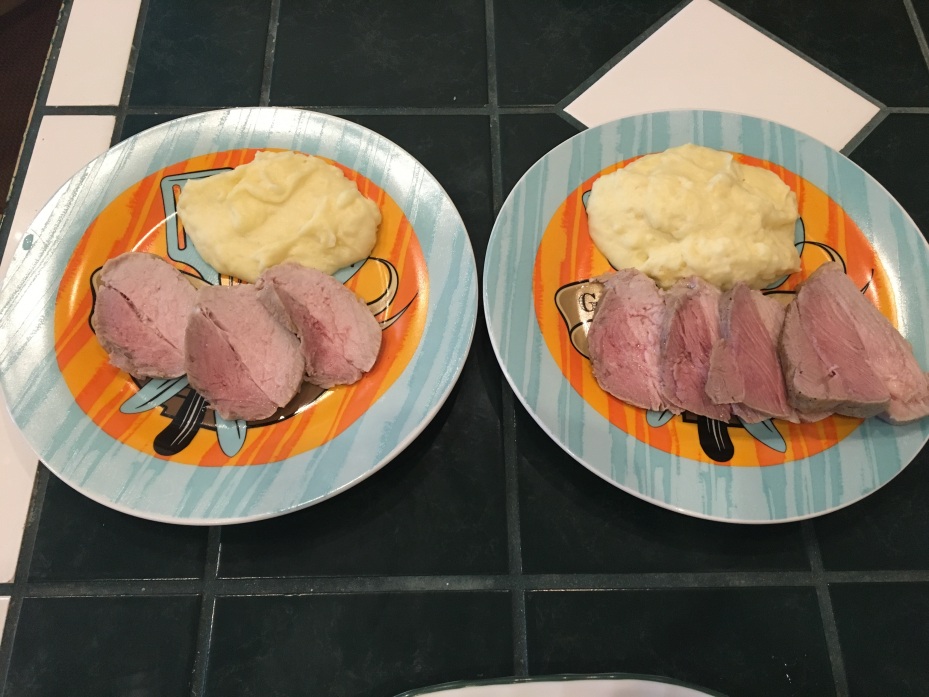
The garlic greens were chopped and sauteed first, and then the boiled greens were also chopped and sauteed in some olive oil, and given a dash of ancient sea salt and cracked black pepper. The meat was given identical seasoning in it’s own separate pan. The key here is to not overcook the meat, and to use a lid so that it comes out nice and tender.

I call this dish, ‘Brassica and Bambi’.

Brassica and Bambi

Delicious was not even the word for it. It has to be one of the top five meals that I’ve ever prepared, in any medium, wild food or otherwise. Mouth watering delicious. Almost better than sex, delicious. Yea, it was that good.

Total cost? About $1 worth of rice and 75 cents worth of salt, pepper, and olive oil. And that’s to feed three people. Otherwise, free. The bambi was donated by a friend specifically to give this dish a more ‘wild’ aspect. Thanks M! :)

Thistles, Continued.

For those who are interested, regarding the prior unknown thistle, read on. Otherwise, the article ends here. Thanks for reading! :)

When is it OK to eat an ‘unknown’ plant? When the only way that it’s unknown to you is that you don’t have it’s specifics tacked down, but in which there are no non-edible or toxic family members or toxic look-alikes. In other words, if the whole family of plants is ‘safe’, then it doesn’t really matter much, now does it?

I’m not ashamed to say I haven’t really cared enough to narrow this thistle down to a specific species. Mostly because I truly don’t care. Not even a little. It’s food. End of story. I have bull thistles in my yard (Cirsium vulgare.) This isn’t one of those. I originally thought that it could be a Cirsium edule, but those are supposed to be confined to the West Coast, and now that I’ve actually found pictures of what the leaves look like, they look nothing like Cirsium edule. Pictures of anything other than a bull thistle are very hard to come by. It could be what they call a ‘pasture thistle’, but the bottoms of the leaves aren’t silver, just kind of green and shiny. Oh well… It would be much easier to ID if it actually bloomed, but it’s kind of hard to tell when the idiot city comes along and mows them all to the ground before they have a chance to flower. (They tend to grow along the SIDES of the fields, not so much IN the fields proper, around where I live…) However, all true thistles are equally edible, and this is a true thistle. Beyond that, the specifics are strictly academic and don’t really interest me. That might be an odd statement for a forager to say, especially from one who is usually interested in the academic end of things, but it’s absolutely true.

Basically, I think we tend to over complicate things when it comes to foraging. As I’ve always said, the Indians didn’t differentiate between different edible plants of the same species unless there was a real need to do so. If it was edible, that was that. Maybe one was choice and one wasn’t, and they’d certainly have had a preference if that was the case. And they’d know if one was ‘toxic’ and to avoid that one.

But they would not have cared one whit to differentiate between thistles that were all equally edible, and in my experience, pretty much all taste quite similar.

So, who am I to do so? Unless something is going to damage me in some way, I don’t care about the useless nuances.

Let me give you a modern example:

Do you really give a rip about the differences between a Fiji, McIntosh, Granny Smith, Red or Golden Delicious apple at the store, other than perhaps the difference in taste? No, you don’t. You don’t give a rip about it’s Dead Latin hoity toity name. In fact, not one in a hundred thousand of you could tell me that apples are Malus and pears are Pyrus. You know it’s an apple, and all apples are edible, and that’s about as far as your caring goes.

Doesn’t sound so strange when you look at it from that point of view, now does it? ;)

However, if anyone actually knows what this thistle is, I’m all ears. Or eyes, as it were.

(And I’m talking about actually KNOWS from hands on, REAL, personal knowledge and experience, not looking it up and best guessing using some friggin’ ‘key’ and saying… ‘Gee, I THINK it kind of looks like this one…)

So, if you’ve been eating this thistle, and know for sure what it is, send me a line. I suppose that finally knowing the official name for this thing would probably be better than calling it ‘unknown thistle’, as I tend to use it quite a bit, and it does grow quite prolifically around here.

Categories: Food Health, Foraging, Nature, Nature Photos, Organic, Organic Gardening, Organic Meat, Plant Photos, Preparedness, Recipes, Survival, Wild, Wild Cookery | Tags: , , , , , , , , | Leave a comment

Janos’ Plant Profiles, Part I: Spiny Sow Thistle

The full profiles will be posted to, and updated, on the Wild Cookery Forum. I have planned to do these for at least the past year, but have never quite gotten around to it. So without further ado…

Janos’ Plant Profiles, Part I: Spiny Sow Thistle

Common Plant name: Spiny Sow Thistle

Hoity Toity (Dead Latin) Name: Sonchus asper

Classification: Choice Edible Plant

Identification: This plant, a member of the Asteracea Family, has spiny, serrated leaves that curl along and around the stem of the plant. When in bloom it has yellow flowers which look dandelion-like superficially. It’s quite spiny, and prickly to the touch, and you may mistake it for an actual thistle if you aren’t familiar with the two plants. But it’s spines are softer and nowhere near as rigid as a real thistle. The spines are also part of the leaves, and not separate from it and detachable such as with an actual thistle. You can eat the smaller leaves raw without any problems. The older ones however, may be prickly enough that they need to be trimmed or cooked before consumption.

Juvenile Plant Photos

Here are some little guys:

Sonchus asper - Young Juvenile

Sonchus asper – Young Juvenile

Sonchus asper - Juvenile

Sonchus asper – Juvenile

Sonchus asper Juvenile comparison

Sonchus asper Juvenile comparison

Sonchus asper - Juvenile plant in nature

Sonchus asper – Juvenile plant in nature

Flowering Plant Photos

(Pictures to be added when in season)

Plant in Seed Photos

(Pictures to be added when in season)

Uses: You nom it of course! The leaves, buds, flowers, new shoots, and upper part of stem are all edible. Young and tender here is much better than old, tough, and rank. Especially on latex exuding plants. The leaves can be eaten at any time equally well, though younger is typically more tender and less bitter. I like to get the flower buds before they open and use the top section of the plant as kind of a ‘sonchusparagus’ I’ve also cooked and eaten small roots before along with the greens, but can’t officially recommend that as I haven’t been able to find any reference material on it’s use.

Nutrition: Sonchus asper are quite rich in Fiber, Omega-3 Fatty Acids, Vitamin C, Calcium, Iron, Zinc, Copper, and Manganese. Equal to, or more so than most common domesticated vegetables.*

Preparation: Typically I’ll boil these, no matter what part it is, for 15 minutes or so, drain, and then use like any other foundational green. In fact one of the spring delicacies my family looks forward to every year is fresh spiny sow thistle greens mixed with wild garlic greens and mushrooms over rice. It’s a seasonal spring treat that everyone raves about.

Preparation Photos

Sonchus asper and Dandelion leaves

Sonchus asper and Dandelion leaves

Wild Greens Noodle Medley - Two kinds of sonchus, dandelions, wild garlic, chicory, plantain, thistle, dock, and sprinkled with ox-eye daisy petals

Wild Greens Noodle Medley – Two kinds of sonchus, dandelions, wild garlic, chicory, plantain, thistle, dock, and sprinkled with ox-eye daisy petals

Cautions:

There are some unreliable sources that classify this plant as a ‘Noxious Weed’. That’s fair enough, as I classify those sources as pretty darn noxious myself.

I’m sure it’s possible to get a rash from this plant. Maybe even a severe one if you’re that one in a million who has such an allergic reaction. But let’s interject some reality here. Will it likely happen to you? Probably not. You’ll probably be struck dead with a micrometeorite first, or hit by lightning. I collect these barehanded, and even eat them raw from time to time. Guess what? Nothing happens. If someone has issues, they are probably also allergic to other ‘milky’ latex exuding plants, such as dandelions and wild lettuce. I highly doubt most are allergic to this plant in particular.

But that doesn’t mean that one in a zillion people won’t be affected by something like this, so use caution.

There’s the token safety disclaimer. Use caution when picking if you are allergic to other latex exuding plants. Some people are allergic to peanuts too. For the rest of us, it’s a fantastic nutrient dense wild food.

The vast majority of all people will find this plant to be delicious and nutritious.

References:

* Dr. John Kallas, PhD, “Edible Wild Plants” – Pps 358 – 359.

Categories: Food Health, Foraging, Green, Janos' Plant Profiles, Nature, Nature Photos, Organic, Organic Gardening, Reclaimed Edibles, Wild, Wild Cookery | Tags: , , , , , , , , , , , , , , | Leave a comment

Winter’s Dying G(r)asp

Cross-posted at the Wild Cookery! Forum.

Well I woke up to Winter’s last gasp this morning.

Winter in March

Last year this time we had mid 70′s weather and I was picking 6 inch wild garlic greens, along with dandelions and some plantains.

This year? Well the ground was ALMOST unfrozen when I walked on it yesterday. Almost. Kinda almost, but not quite, squishy, yet still frozen crunchy. Well, today it’s frozen solid again. But now it’s supposed to warm up to a high of 36 before creeping back down to a low of 25 overnight.

Currently, it’s a balmy 33 degrees.

With a several inch glazing of fluffy snow.

There’s supposed to be even more snow on the way. We’ll see I suppose.

In my walk yesterday I saw that my hyacinths were barely poked up as were the daffodils, but only in the planter right next to the house, where it’s warmer. The ones in the main yard are still not even above the lawn yet.

There is a very marked difference from year to year. Which is why I always and very strongly encourage people to get used to paying attention to their weather when it comes to wild plants. Screw what your foraging book says about ‘time of year’ on the plant tables. Pay attention to what your local weather is doing.
As I said, last year, I was harvesting half a foot tall wild garlic greens and decent sized dandelions in 70 to 80 degree days. This year? Everything is still winter-purple colored as the alcohol in the leaves hasn’t changed back into sugar yet. You don’t want those over-wintered leaves anyway. Leave those for the critter. What you want is the new spring growth, and that simply hasn’t happened yet. AT ALL. Not even the wild mustards or the garlic mustards have poked their heads up yet. (Other than the garlic mustard that have over-wintered, which is normal, but again, you want the new and rapid spring growth.)

Snow over the Dandelions

My pet dandelion on my windowsill is looking out into the yard, with sad leaves and yearning for sunnier days. It’s hard to see a size comparison from the photo, but the leaves are about eight to nine inches long, and he’s survived fine all winter on the windowsill. I grew him from a tiny little root shard from a dandelion that I’d collected about two years back now. He hasn’t bloomed yet, just puts on very nice looking leaves. I don’t eat this one. It’s my winter ‘greenery’ to look at and enjoy, when all else in the world is dead and frosted over.

So, here’s a toast to winter’s dying g(r)asp, and may all of us in the northern areas finally have some green to forage soon! Slainte Mhor!

Categories: Foraging, Nature, Nature Photos, Plant Photos, Wild, Wild Cookery | Tags: , , , , , , , , , , , | Leave a comment

Welcome to the Brand New Wild Cookery and Foraging Forums!

My dearest foraging friends,

First off, let me apologize for the inconvenience of having to move the forum. There was, however, no way around it. The old forum’s servers crashed a total of eight times, just today in my efforts to copy over the data. Such a flaky forum host is not acceptable to me. You deserve better than that. I think that now, we have a stable forum hosting service. I’ve used this provider before in the past, and whilst not totally ideal in some respects, it should indeed be much more stable and productive.

This is a completely new, made from scratch forum. It only looks like the old one. I mirrored it as much as I could, with the exception being that I cleaned up and re-organized some of the forum boards a bit, to be, I hope, a bit more comprehensive.

However, it is not a totally clean slate. The meat and bones of the last forum were saved and form the backbone of this new forum.

I copied over all the text from all the posts that I could, and I got everything that I saw. There were a few things that I’d posted that I have intentionally not transferred over, but most of the important stuff is still there.

If I have missed anything, please let me know and I will do my best to rectify it.

Of course, the text will just be posted in the threads, not under the original poster, but I copied it with quotes when applicable so you can see who originally wrote the post.
Everyone will have to unfortunately re-register, but that should be a relatively quick and painless process.

Be aware that being a free forum it will try to offer you junk in the sign up. You can just click on the slightly greyed out ‘no thanks’ when it comes up. The number of offers that you will have to click through varies, but typically 3 – 5.

Thank you again for your time and participation, and I hope to see you all at the new forum soon.
All the best, my friends.

The new forum is located here: http://wildcookery.freeforums.org

~Janos

Categories: Updates, Wild, Wild Cookery | Tags: , , , , , , , , , , | 3 Comments

Please Join us at the Brand New Wild Cookery Forum!

Forum Status: ONLINE! – Updated 03/15/2013 01:55

The data transfer from the old forum has been completed, and we now have a new and fully functional forum.

The brand new Wild Cookery Forum is located at: http://wildcookery.freeforums.org

Categories: Uncategorized, Updates, Wild Cookery | Tags: , | Leave a comment

Looking for Alternative Forum Hosting Options

Forum Status: OFFLINE – Updated 03/14/2013 19:38

Well, that’s it folks. This hosting service has gone down for the third time today. Thus, I’ve secured a new hosting service with very similar options to the last one (minus the massive downtime!), and will be in the process of manually and painstakingly copying over as much of the forum as I can.

I will let everyone know here when it is back up and running again at it’s new home, and will reveal the new url at that time

The brand new Wild Cookery! Forum can be found at: http://wildcookery.prophpbb.com  To be determined.

*****

Update:

So far no dice. I’ve found plenty of forum hosting services that WOULD work, except for the fact that they for some strange reason lock down this or that, and don’t let you modify the styles element in some way. I’d like to currently keep the default theme, or at the very least, be able to import it, but every PHPBB3 hosting service I’ve found neurotically locks down random elements of the Admin panel that make no sense whatsoever. For example, several allow extra mod functions and imports of certain things and allow you to add chat, etc, but at the same time don’t let you import your own website image like the Blackberry one you see above. WTF is up with that?

Anyway, currently, and as much as I hate to say it, it’s looking like the best option at this time is to stay with this current forum service.

I love the forum, and the admin options that I have on the back end, I just don’t like their uptime, and being down twice in two days.

So, I guess we’ll see. This sucker goes down again however, and my hand will be forced, and I’ll pick another forum host, theme be damned.

*****

There have been outages encompassing the whole of the hosting service prophpbb the past two days. This forum has only been up a few days, and already we’ve had several hours of total and absolute downtime. This isn’t acceptable to me.

Also, the idiots over at prophpbb have their HELP BOARDS on the same servers as their hosting. Which means, that when the hosting service goes down, so do their forums. Brilliant. Absolutely brilliant. So not only are we in the dark when the forums go down, but we have no way of finding out a status, or even a ‘why’ they’ve gone down, we just have to keep checking back every so often to see if the forum is up or not, and that also is not acceptable to me. For an IT company, that’s about as unprofessional as it gets and I refuse to deal with such blatant incompetence.

Thus, I’ll be looking for another hosting service.

This will of course mean re-creating the base forum structure from scratch. But better to do that NOW, and have a stable forum going forward than keep going on something which has proven itself to be unreliable.

I’ll let ye all know what I find…

Categories: Updates, Wild Cookery | Tags: , | Leave a comment

Forum Status: OFFLINE – Updated 03/14/2013 11:28 AM

Moved all the status notifications onto the page link above.

Categories: Updates, Wild Cookery | Tags: , , , , | Leave a comment

The American Consumer: Grade A Idiot

I try to keep this blog mostly about foraging and Wild Cookery, but there are some things I just can’t stand…

I saw this story in the news today.

It’s about how the sugar companies need a bailout and the govt is going to buy 400,000 tons of sugar to keep the already federally funded companies afloat.

Which also reminded me of how stupid people are.

(Cross-posted on the Wild Cookery Forum,)

Once upon a time I owned a little Celtic Silver Jewelry store. (And a Pizza shop, but that’s another story entirely which I’ll save for another day.)

The wholesale cost for the rings I’d get from Blake Brothers and other silver suppliers was, on average, about $2.50 to $4 per ring, depending upon the size and intricacy of the ring. Now these were sterling silver rings. .999 silver. The same ones you see offered for $40 to $50 at your local retailer. Hint: They only paid about $3 for them, and you’re getting screwed.

Anyway, not being a greedy fellow, I set my price for the rings at about cost plus 10% – 20% This means that I offered the rings, roughly, for between $3 and $5. People couldn’t believe it. The first several dozen people in my shop insisted that the rings had to be fake or that something underhanded had to be going on. Or that I had gotten ripped off, and wasn’t sold real silver.

One woman INSISTED that I didn’t know what I was talking about, as she was a self proclaimed silver jewelry connoisseur and affectionado, and she’d paid NO LESS than $40 for ANY silver ring she’d ever bought. She was NOT happy when I told her that she’d been hornswaggled. I even offered to show her the wholesale catalogs, but she’s have nothing of the sort. I was wrong, she was right, and according to her I was selling defective merchandise of some kind.

One fellow though, had a brain on him. He came in the door, saw the prices on the rings, looked at the rings, looked at them again, and said… “Wow.. are these sterling silver.” “Yes, they are.” I said.

“I’ve never seen them this cheap, how do you sell them so inexpensively?” he inquired. I then explained wholesale cost vs retail markup, and the fellow was aghast. He’d come in to look for a nice ring for his wife, and had planned on spending $40 to $50. So, instead, he ended up buying 10 rings. A few for his wife, that he said he’d keep tucked away for future occasions, and one for each of his daughters. The guy left a very happy man and spent like $30. Less than what he’d planned on spending for ONE single ring.

The fellow said something then that I’ll never forget. He said, “You know my friend, most people are dumber than dog shit, and very set in their ways. Have you had trouble selling rings at this price?”

I told them that I indeed had. He suggested marking them up in the future to $35 each and then put up a sign that said something like: ‘Sterling Silver sale, 25% off!’

I thought that was kind of low down and sneaky, but I had a feeling this guy was right.

So, a few weeks later I did just that.

New people came in, and the silver stuff flew out the door like hotcakes.

Yes ladies and gentlemen, the average American consumer is indeed dumber than dog shit.

And I have no pity or respect for them.

They could have had silver rings at cost plus 10 percent. But since they refused to buy them at that price and refused to adjust their paradigm, I then jacked the price up slightly lower than regular retail. To them they were getting a ‘great deal’, when in all actuality they were getting totally screwed. Just less totally screwed than they usually were. But hey, the customers were happy as clams, so more power to the poor fools.

They get things into their head that certain things ‘must’ cost a certain minimal price and if there is any deviation from that (other than of course a price increase), then they think something hinkey is going on, or that something isn’t ‘real’. Or that it’s defective, or whatever.

Now aren’t you glad you aren’t an average American consumer? ;)

(If you were, you certainly wouldn’t be here talking about and learning about foraging, would you?)

Categories: Economy, Government | Tags: , , , , , , , | 1 Comment

Looks Edible But Isn’t, Part I: Tartarian Honeysuckle

This is the first installment in a little series that has been a long time coming. I originally had another plant slated for the first article, but I found the pictures I’d been looking for on this plant, so here it is.

Tartarian Honeysuckle – Lonicera tatarica

Tartarian Honeysuckle berries (Lonicera tatarica) are NOT edible.

The ripe fruit is a red cherry colored hue, and will bear DOUBLE fruit. They will be side by side and a bit merged with each other..

The Tartarian Honeysuckle (Lonicera tatarica) is a woody shrub.

Tartarian Honeysuckle – Lonicera tatarica

It is found all over my local area, and is strangely somehow confused by some people with the autumn olive. This is strange to me as Tartarian Honeysuckle berries are double fruit and look nothing like an autumn olive. But then again, it is an unfortunate (and dangerous) tendency amongst some beginning foragers that they make things ‘fit’ the description they have in their head instead of what is before their eyes.

Tartarian Honeysuckle – Lonicera tatarica. Close up of double berries.

I haven’t read anything about the fruits being overly toxic per se, with the most that they’re going to do is give you some digestive issues.Either way, I wouldn’t eat them.

I’ve also noticed that the birds totally ignore them. And birds eat plenty of things we can’t, and plenty of things we can, such as cherries and other fine berries. But if the BIRDS won’t eat it, there’s a sign to leave it alone. As with everything in foraging, when in doubt, don’t eat it.

Categories: Foraging, Looks Edible But Isn't, Nature, Nature Photos, Plant Photos, Wild, Wild Cookery | Tags: , , , , , , , , | Leave a comment

Blog at WordPress.com. Theme: Adventure Journal by Contexture International.

Follow

Get every new post delivered to your Inbox.

Join 72 other followers

%d bloggers like this: